

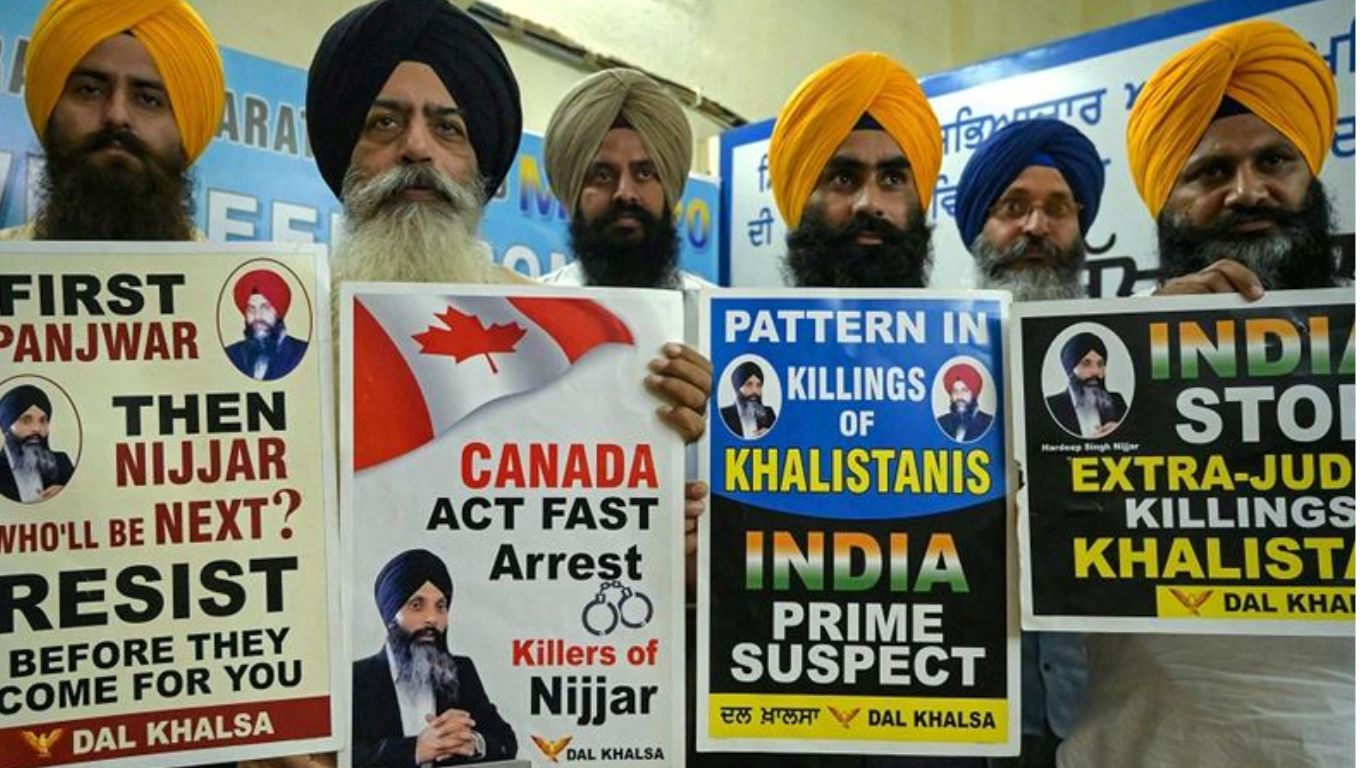
(AP)– The surprising accusation this week by way of Canadian top Minister Justin Trudeau that India may additionally had been in the back of the assassination of a Sikh separatist chief in British Columbia has raised several complicated questions about the character of Sikh activism in the North American diaspora. Canada is domestic to the biggest Sikh populace outdoor India.
There are approximately 800,000 Sikhs in Canada – roughly 2% of the populace. America is domestic to approximately 500,000 Sikhs. Whilst a few Sikhs argue there’s extensive help within the diaspora for an unbiased Sikh kingdom inside the subcontinent called Khalistan, others say there may be no such consensus.
The debate over support for Khalistan and what activism looks as if inside the Sikh diaspora has intensified after Trudeau’s accusation that India may additionally have had a hand inside the assassination of forty five-year-vintage Hardeep Singh Nijjar, a Canadian citizen shot useless out of doors the Guru Nanak Sikh Gurdwara in Surrey on June 18.
That facts is based on Canadian intelligence as well intelligence from a primary best friend, in keeping with a Canadian respectable who spoke on situation of anonymity as they were not authorized to talk publicly. The information is primarily based in part on surveillance of Indian diplomats in Canada. Nijjar, a prominent Sikh chief in British Columbia, become particular a terrorist with the aid of India in 2020 for his alleged hyperlinks to the Khalistan Tiger pressure, a set campaigning for impartial Khalistan in the Punjab area of India. The energetic insurgency ended decades ago, but high Minster Narendra Modi’s authorities currently warned that Sikh separatists have been looking to stage a comeback and pressed international locations like Canada to do greater to stop them.


The question of Khalistan or Sikh sovereignty “is not a fringe concept or idea within the network,” said Jaskaran Sandhu, a board member with the sector Sikh organisation of Canada, the most important Sikh advocacy business enterprise in that u . S .. “whilst you examine Sikh records, it has usually been about sovereignty and self-willpower,” he said. “Sikh voices calling for an impartial nation in which they could practice their religion freely have become louder. There is strong help for Khalistan in the diaspora due to the fact we’ve got the proper to unfastened speech and the right to prepare here, even as you don’t have that during India.” India has outlawed the Khalistan motion.
Agencies associated with it are listed as terrorist groups below India’s unlawful activities (Prevention) Act and are considered a severe safety hazard by using the authorities. In the U.S. And Canada, Khalistani activism isn’t always unlawful and is protected under loose speech laws. Gurpatwant Singh Pannun, wellknown recommend with Sikhs for Justice, has also been listed as a terrorist by the Indian authorities. The employer became banned via India in 2019. Pannun has been a leading organizer of the Khalistan Referendum, inviting Sikhs global to vote on whether Punjab should come to be an unbiased country based totally on religion. Organizers of the nonbinding referendum desire to offer the results to the U.N. Wellknown assembly in about two years.
“Sikh sovereignty method having your impartial, independent nation where you’ve got general manipulate of the state’s sources,” Pannun stated, including that Sikhs in India are nevertheless forced to stay beneath Hindu laws governing marriage, inheritance and adoption. Pannun faces sedition and a slew of other costs in India and has confronted grievance for announcing “Indo-Hindus who paintings in opposition to the pastimes of Canada” need to return to India. Pannun says he labored closely with Nijjar for decades and calls him “one of the committed campaigners for Khalistan.” “He knew his existence changed into in hazard,” he said.
“We spoke 18 hours before his assassination. But he by no means took a step again.” no longer all agree that Khalistani activism is on the upward push within the diaspora. Amandeep Sandhu, India-primarily based journalist and creator of “Panjab: trips through Fault traces,” believes it stays a fringe movement. Despite the fact that two hundred,000 people may also have shown as much as vote at referendums held to date, that range is small compared to the 30 million Sikhs who live in India and around the sector, he stated. Whilst Sikhs who migrated to North the us, Australia and the UK may additionally deliver inter-generational trauma and reminiscences of a “brutal Indian state,” they have got not end up engaged in the fight for Khalistan because they may be busy building lives for themselves, Sandhu stated.
“lifestyles is hard for migrants,” he said. “How an awful lot money and sources do you’ve got for Khalistan, a state that remains undefined?” Neither the Sikh network in India nor the diaspora is monolithic, he said. In India, Sikhs are also the various most patriotic. They are approximately 2% of India’s population, however shape eight% of the kingdom’s navy, and Sikh squaddies are many of the state’s maximum adorned, Sandhu stated. Rajvinder Singh, a new Delhi store proprietor, said he believes “Khalistan’s ideology has no area in the minds of the Sikhs.” “I don’t aid Khalistan,” he stated.
“If some foreigners trust in it, what can we do about it? That is a count for diplomatic discussions. Both nations need to paintings closer to turning into better change companions and no longer combat over these troubles.” within the diaspora, it’s far hard to tell what number of sincerely guide nation separatism, said Anneeth Kaur Hundle, companion professor of anthropology and a consultant in Sikh research at the college of California, Irvine. Hundle stated that similarly to the Khalistan trouble, lots of new activism within the diaspora has focused on gaining extra recognition for Sikh suffering related to events of 1984, whilst top Minister Indira Gandhi sent the Indian army to the Golden Temple in Amritsar, the holiest of Sikh shrines, to flush out numerous key figures in the developing militant Khalistani motion.
Months later, following Gandhi’s assassination with the aid of her Sikh bodyguards, hundreds of Sikhs were killed across north India as the violence spread beyond Amritsar. “at the same time as network participants are not in agreement with regards to what autonomy is or looks like, all Sikhs do want to have interaction in some thing activism they need with out being attacked or killed for it,” she stated. “Trudeau, with this announcement, has stood up for all activists inside the diaspora.” due to the fact Monday, ties between India and Canada have plunged to their lowest point in years as India stopped issuing visas to Canadian citizens and informed Canada to reduce its diplomatic personnel.
Some say those occasions are having an effect on the rest of the Indian diaspora and straining dating with Hindus, who slightly outnumber Sikhs in Canada. Samir Kalra, managing director of the Hindu American basis, stated the “resurgence of Khalistani extremism inside the diaspora has extensively impacted Indian americans of all backgrounds and has caused a remarkable deal of worry and insecurity inside the community.” He mentioned “a annoying fashion” of incidents consisting of vandalism at Hindu temples and Mahatma Gandhi statues in Canada and the us.
“Indian guys, girls and youngsters have persevered intimidation and harassment at India Day gala’s in each nations, in addition to at a Diwali pageant in Canada last 12 months,” stated Kalra. He said Indian americans additionally had been burdened out of doors the Indian Consulate in San Francisco, in which “Khalistani extremists have frequently shown up and attempted to interrupt into and set on fireplace the consulate building.” Cynthia Mahmood, professor of anthropology at principal university in Iowa and an expert on the Khalistani motion, has talked to militants and written approximately the idea of violence and nonviolence in Sikhism. She holds that it’s far extraordinary from Western ideas. “In Sikhism, the query is set the combat for justice,” she stated. “every so often you have to use violence, and occasionally, nonviolence, for self-defense and to pursue justice. The Western polarity of war and peace doesn’t pretty follow within the Sikh context.”







Discussion about this post