

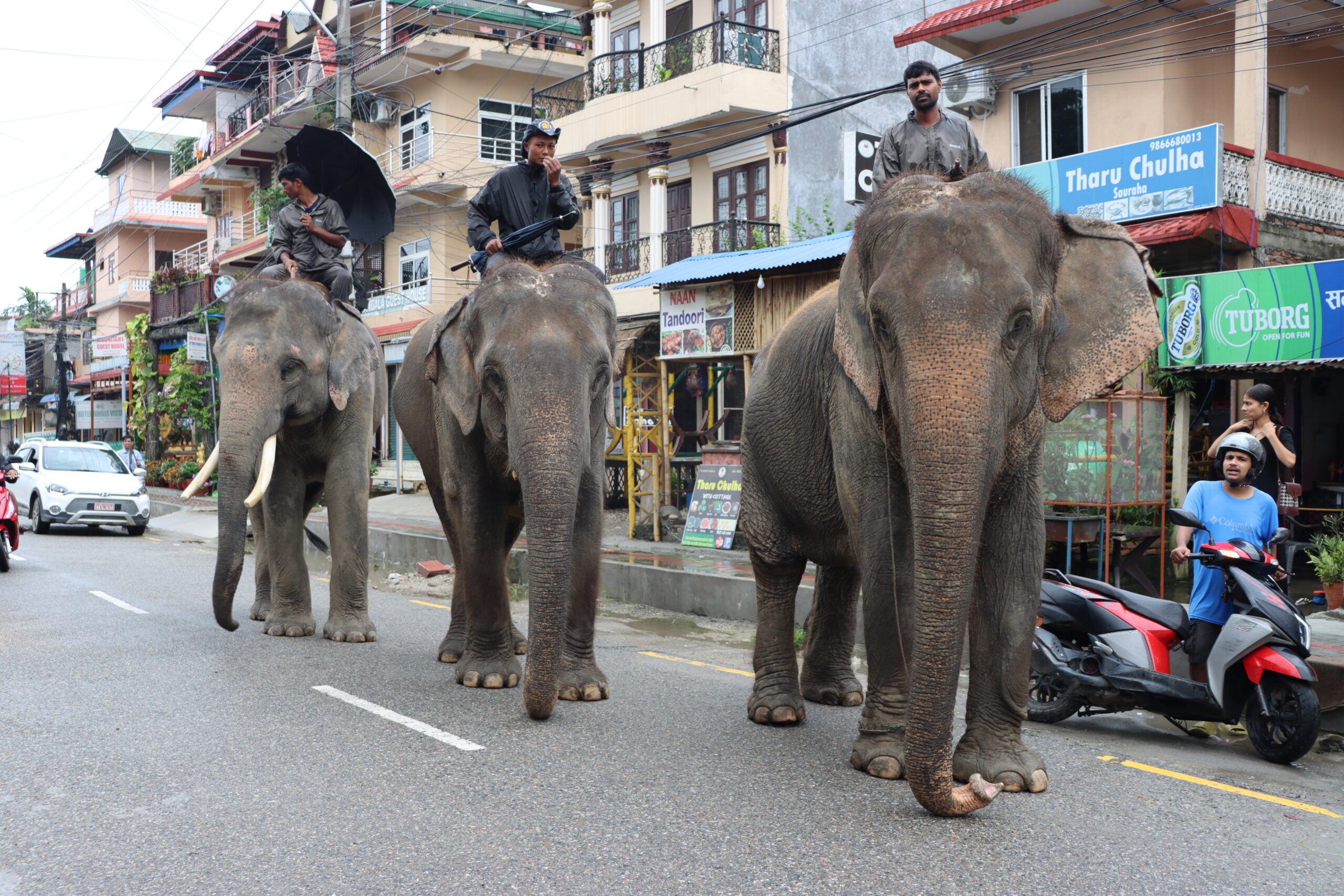
One in every of Nepal’s primary traveler destinations is Sauraha, placed within the Chitwan country wide Park, wherein travelers come to study the natural world. The rare sighting of animals like one-horned rhinoceros and different wild animals attracts vacationers, specifically the ones interested by natural world exploration.
The practice of elephant safaris commenced in Sauraha around 2041 B.S. (1984 A.D.) to facilitate the statement of flora and fauna within the countrywide park. Vacationers used to come here especially to ride elephants for safaris. But, lately, there has been a decline in the range of vacationers coming for elephant safaris, which has precipitated subject.
The former president of the Sauraha Tourism Council, Gokarna Ghiri, shared that the number of vacationers accomplishing elephant safaris has step by step decreased through the years. He stated that after the onset of the COVID-19 pandemic, handiest around 25% of travelers coming to Sauraha had been collaborating in elephant safaris. This decline in elephant safari sports has affected tourism within the Sauraha place.


Ghiri defined, “the majority of travelers used to have interaction in various sports related to elephants. Some would ride elephants, at the same time as others would move on safari.” He similarly expressed concern that the reduction in elephant sports is negatively impacting tourism.
Because of this decline in tourism, many elephant-associated agencies have suffered. Even home travelers are reducing in variety. Ghiri emphasized that the decrease within the wide variety of vacationers immediately impacts the demand for elephant sports.
A few commercial enterprise proprietors in Sauraha had been worried in elephant-related activities for nearly two decades, with the aim of boosting tourism. But, the COVID-19 pandemic had halted those activities temporarily.
Nagendra Chapagai, a businessman in Sauraha, have been concerned in elephant tourism for extra than two many years. He expressed that elephants had been idle for the duration of the pandemic and couldn’t be used for any tourism activities. He additionally shared that the costs for maintaining elephants and their properly-being are substantial.
In step with him, the monthly price of keeping a unmarried elephant stages from 150,000 to 2 hundred,000 Nepali Rupees (NPR), and it requires at the least mahouts (elephant caretakers). However, the profits generated from an elephant isn’t always even close to covering those expenses. He mentioned that keeping elephants for tourism functions is becoming financially tough.
The United Elephant Operation Cooperative’s chairman, Dipendra Khadka, said that the quantity of elephants getting used for tourism has been lowering yearly. He emphasized that despite the decrease in elephant-associated activities, elephants’ conservation should be a concern.
Specialists in the field, like Dr. Vijay Kumar Shrestha, a senior veterinarian on the Chitwan country wide Park, have highlighted the challenges of preserving and caring for elephants, both in terms in their health and dietary necessities. He cautioned that related to the non-public sector in elephant care could probably assist increase tourism while making sure proper take care of the animals.
According to Dil Bahadur Purja Pun, the chief Conservation Officer of Chitwan countrywide Park, the war among human activities and elephants calls for mitigation. He additionally knowledgeable that the authorities has initiated the procedure of registering privately owned elephants, with the aim of better management and conservation.
It’s miles evident that the decline in tourism due to the pandemic has drastically affected the elephant safari enterprise in Sauraha. However, professionals accept as true with that related to the private quarter and well dealing with elephant sports should make contributions to each conservation and sustainable tourism development.




Discussion about this post