

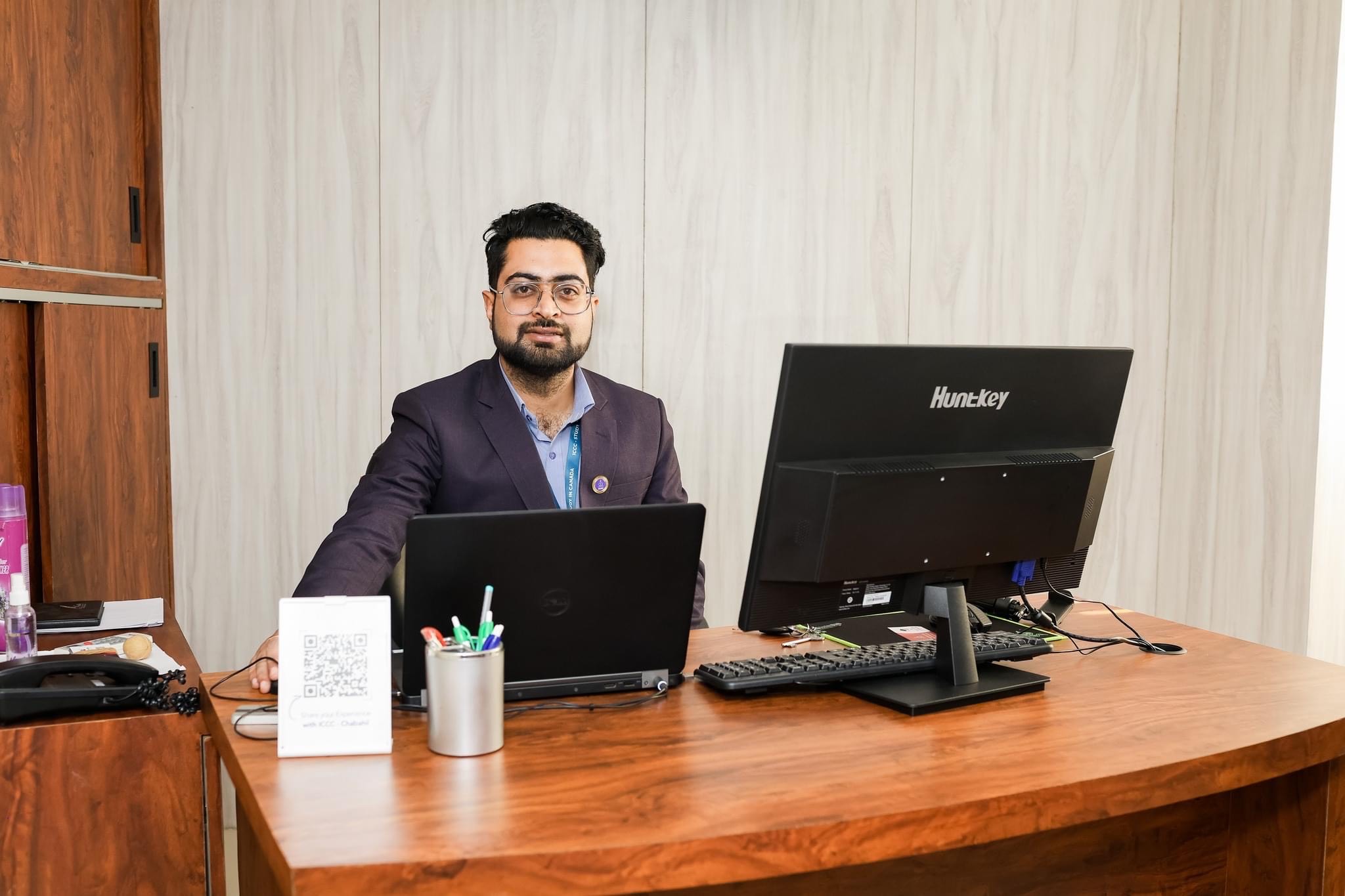
In the realm of academic counseling, one name stands out as a beacon of expertise and guidance: Prafulla Parajuli. With a career spanning over a decade, Parajuli has cemented himself as a trusted advisor for students seeking educational opportunities abroad. Hailing from Kathmandu, Nepal, Parajuli’s journey in the consultancy and counseling industry commenced in 2014, gradually evolving to direct involvement in counseling since 2019.
Initiating his counseling voyage as a Junior Counselor at the Overseas Education Center in Jawlakhel, Parajuli swiftly ascended the ranks, showcasing proficiency not only as a counselor but also as a seasoned instructor in IELTS and PTE. His adeptness in navigating the intricacies of study permit applications for Canada has made him an indispensable resource for aspiring international students.
Having lent his expertise to prominent consultancies such as the International Career Counseling Center and Professional Educational Consultancy, Parajuli currently holds the esteemed position of Senior Counselor at Global Opportunities Nepal, a prestigious institution with a network spanning 23 branches, including several in India.


In light of recent developments in the Canadian education landscape, Parajuli emerges as a pivotal figure in deciphering the evolving terrain for international students. The Canadian government’s announcement in January 2024 of a temporary two-year cap on study permits has sent ripples through the education sector, affecting around 360,000 prospective students. Notably, exemptions to this cap exist for students pursuing K–12, master’s, and doctoral degrees, thereby altering the dynamics primarily for undergraduate applicants.
Further amendments unveiled in January delineate a provincial allocation system for study permits and necessitate the submission of a Provincial Attestation Letter (PAL) for non-exempt students. Moreover, recent updates, effective May 15, 2024, preclude students enrolling at public-private partnership institutions from applying for post-graduation work permits (PGWPs) upon graduation. Similarly, as of March 19, 2024, open work permits are restricted to specific categories, including spouses or partners of international students enrolled in master’s and doctoral programs.
In elucidating these developments, Parajuli’s insights serve as a guiding beacon for students navigating the intricate maze of Canadian immigration policies. His comprehensive understanding of the nuances surrounding study permits and post-graduation prospects equips students with the foresight needed to make informed decisions amidst evolving regulations.
As the academic landscape continues to evolve, Parajuli remains at the forefront, offering unparalleled expertise and steadfast guidance to students aspiring to pursue their educational dreams in Canada. With an unwavering commitment to excellence, Parajuli epitomizes the epitome of academic counseling, ensuring that every student’s journey towards international education is met with clarity, confidence, and success.




Discussion about this post