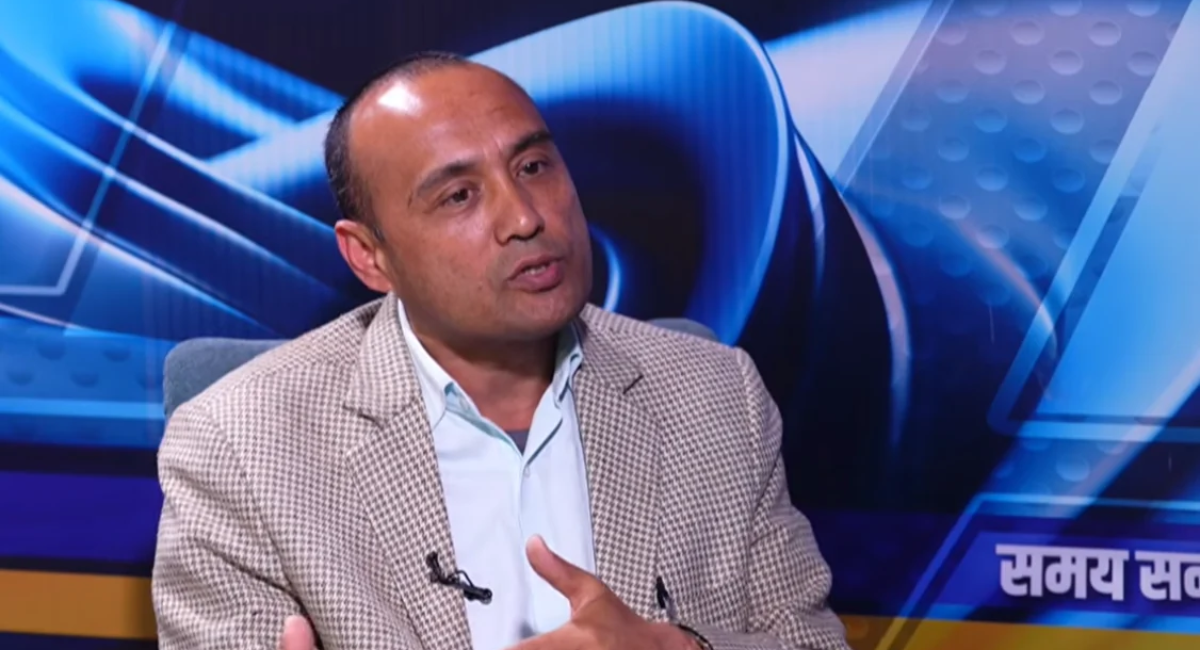
Speaking with Rabindra Subedi on Himalaya Television’s Samaya Sandarbha programme, Nepali Congress Central Committee member and engineer Laxman KC said there were doubts about the survival of the current government, primarily because of the Rastriya Swatantra Party (RSP) rather than other political parties.
According to KC, various government actions and controversies have been weakening public confidence. He cited the Inspector General (IG) controversy, passport contract controversy, the Sunsari-Morang contract issue, the incident in which joint secretaries and project managers were summoned to the Prime Minister’s Office, and the removal of squatters without providing alternative arrangements.
He also questioned the government’s failure to make information public following the Prime Minister’s visit to India and its lack of dialogue with opposition parties.
KC, who was elected a Central Committee member through the Nepali Congress’s 15th General Convention, said he had been closely involved in the party’s development and infrastructure-related and technical affairs since his tenure as president of the Society of Nepalese Engineers (SEN).
Regarding internal disputes and parallel activities within the party, he said differences of opinion were natural in a democratic party. However, he expressed confidence that all factions would come together within the mainstream and remain united by the time of the election.
According to him, the Nepali Congress has been reaching out to local governments and neighbourhoods through its “We Are Ready” campaign to discuss public concerns, infrastructure development and policy-related issues.
Speaking about urban development and engineering, KC said the Kathmandu Valley should be developed under an integrated master plan.
He said designated recharge zones were necessary as groundwater levels continued to decline and traditional stone water spouts were drying up. He also proposed creating car-free zones in areas such as Asan and Thamel and introducing dedicated lanes on the Ring Road.
KC said safe infrastructure, traffic education, vehicle condition inspections and road safety audits were essential to reducing road accidents.