
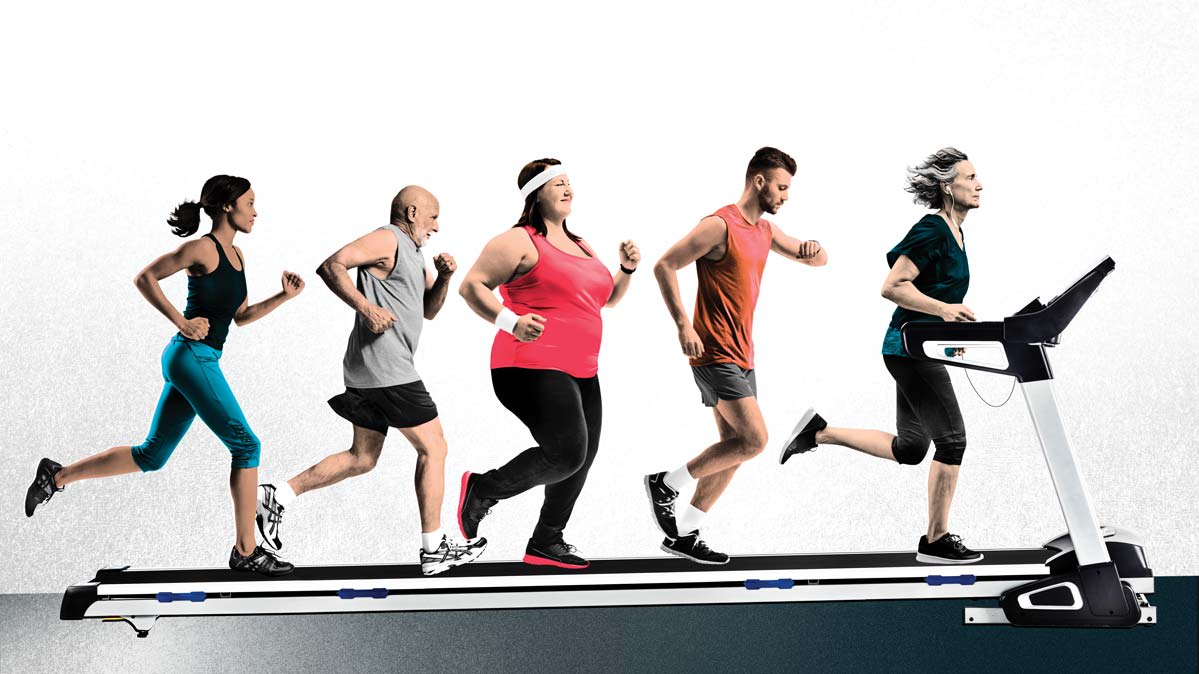
WHO defines physical activity as any bodily movement produced by skeletal muscles that requires energy expenditure.
Physical activity refers to all movement including during leisure time, for transport to get to and from places, or as part of a person’s work. Both moderate- and vigorous-intensity physical activity improve health.
Popular ways to be active include walking, cycling, wheeling, sports, active recreation and play, and can be done at any level of skill and for enjoyment by everybody.
Regular physical activity is proven to help prevent and manage noncommunicable diseases such as heart disease, stroke, diabetes and several cancers.
It also helps prevent hypertension, maintain healthy body weight and can improve mental health, quality of life and well-being.
Key facts
How much of physical activity is recommended?
WHO guidelines and recommendations provide details for different age groups and specific population groups on how much physical activity is needed for good health.
WHO recommends:
For children under 5 years of age
In a 24-hour day, infants (less than 1 year) should:
In a 24-hour day, children 1-2 years of age should:
In a 24-hour day, children 3-4 years of age should:
Children and adolescents aged 5-17 years
Adults aged 18–64 years
Adults aged 65 years and above
All pregnant and postpartum women without contraindication should:
People living with chronic conditions (hypertension, type 2 diabetes, HIV and cancer survivors)
Children and adolescents living with disability:
Adults living with disability:
Benefits and risks of physical activity and sedentary behavior
Regular physical activity, such as walking, cycling, wheeling, doing sports or active recreation, provides significant benefits for health. Some physical activity is better than doing none.
By becoming more active throughout the day in relatively simple ways, people can easily achieve the recommended activity levels.
Physical inactivity is one of the leading risk factors for noncommunicable diseases mortality. People who are insufficiently active have a 20% to 30% increased risk of death compared to people who are sufficiently active.
Regular physical activity can:
In children and adolescents, physical activity improves:
In adults and older adults, higher levels of physical activity improves:
For pregnant and post-partum women
Physical activity confers the following maternal and fetal health benefits: a decreased risk of:
Health risks of sedentary behaviour
Lives are becoming increasingly sedentary, through the use of motorized transport and the increased use of screens for work, education and recreation.
Evidence shows higher amounts of sedentary behaviour are associated with the following poor health outcomes:
In children and adolescents:
In adults:
Levels of physical activity globally
Increased levels of physical inactivity have negative impacts on health systems, the environment, economic development, community well-being and quality of life.
Globally, 28% of adults aged 18 and over were not active enough in 2016 (men 23% and women 32%).
This means they do not meet the global recommendations of at least 150 minutes of moderate-intensity, or 75 minutes vigorous-intensity physical activity per week.
In high-income countries, 26% of men and 35% of women were insufficiently physically active, as compared to 12% of men and 24% of women in low-income countries.
Low or decreasing physical activity levels often correspond with a high or rising gross national product.
The drop in physical activity is partly due to inaction during leisure time and sedentary behaviour on the job and at home.
Likewise, an increase in the use of “passive” modes of transportation also contributes to insufficient physical activity.
Globally, 81% of adolescents aged 11-17 years were insufficiently physically active in 2016.
Adolescent girls were less active than adolescent boys, with 85% vs. 78% not meeting WHO recommendations of at least 60 minutes of moderate to vigorous intensity physical activity per day.
How to increase physical activity?
Countries and communities must take action to provide everyone with more opportunities to be active, in order to increase physical activity.
This requires a collective effort, both national and local, across different sectors and disciplines to implement policy and solutions appropriate to a country’s cultural and social environment to promote, enable and encourage physical activity.
Policies to increase physical activity aim to ensure that:
